Learn Korean Through Stories: Why I Went to Lotte World for My Korean Novel
If you're learning Korean, stories can give you something textbooks often can't: a reason to keep reading.
Instead of memorizing isolated Korean vocabulary and grammar, you encounter them inside conversations, relationships, and situations that make them easier to understand and remember.
That's one reason I create bilingual Korean novels for Korean learners.
And sometimes, writing those stories requires a little field research.
A few months ago, while writing I See Your Heart Vol. 2, I was working on a scene set at an amusement park.

So I went to Lotte World in Seoul.


"이야기를 위해서라면 무엇이든 한다."
I would do anything for my stories.
Researching a Korean Novel at Lotte World
I wanted the amusement park scene to feel real.
So I rode the rides, walked around Lotte World, and explored the park.

Yes, it was research.
Very serious research. 😂
But there was one place I particularly needed to see: the haunted house.
The haunted house was an important part of the scene I was writing, so I walked around looking for it.

And then I discovered a small problem.
There was no haunted house.
It was gone. 😭

What Happens When Your Research Doesn't Go as Planned?
Did that stop me from writing the scene?
Of course not. 😌
I still wrote it.

That's one of the fun things about fiction. Real places can inspire a story, but the fictional world doesn't have to be an exact copy of reality.
And for me, experiences like this are also part of creating Korean stories that learners can actually enjoy reading.
The final amusement park scene appears in I See Your Heart Vol. 2. I'm not going to spoil what happens there. 👀
But this little research trip is a good example of something I care about much more broadly:
Learning Korean doesn't always have to feel like studying.
Why Learn Korean Through Stories?
Many Korean learners spend a long time reading textbook dialogues, short passages, social media posts, or individual example sentences.
Those are useful.
But eventually, you may want to understand something longer.
A story gives you a reason to keep going.
You want to know what happens to the characters. You see vocabulary and grammar appear repeatedly in meaningful contexts. And instead of studying Korean one sentence at a time, you begin practicing the skill of following an entire story in Korean.
That's an important step toward eventually reading Korean books written for native speakers.
How to Use a Bilingual Korean Novel for Reading Practice
This is the idea behind my I See Your Heart series, an illustrated Korean-English novel series created specifically for Korean learners.

Each chapter lets you use a simple Challenge → Check → Learn approach:
Challenge: Read the Korean-only version first and try to understand as much as you can from context.
Check: Read the bilingual version and use the English translation to check what you understood.
Learn: Use the study guides to explore Korean grammar, expressions, vocabulary, and culture from the story.
You don't need to understand every Korean word on your first try.
The goal is to challenge yourself first, get help when you need it, and then gradually become more comfortable reading longer Korean texts. The newsletter describes the same structure: Korean first, English for checking comprehension, followed by study guides covering grammar, expressions, culture, and more.
Korean Reading Practice That Feels Like a K-Drama
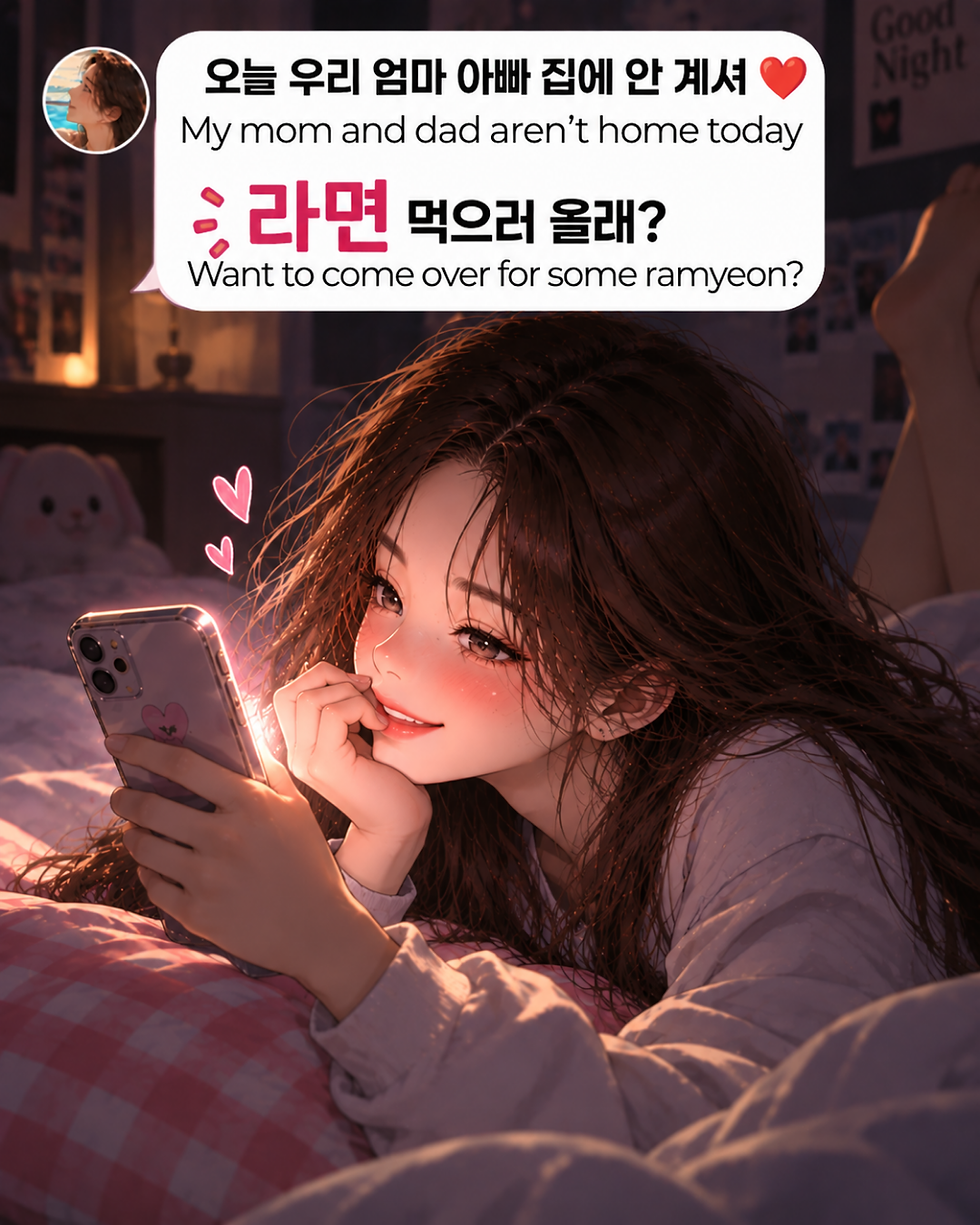
I See Your Heart is a K-drama-style fantasy romance written for Korean learners.
Rather than giving you disconnected reading exercises, the series lets you follow the same characters and story across a full-length novel while practicing Korean along the way.
So if short Korean content is starting to feel comfortable and you're wondering:
“What should I read next in Korean?”
A learner-friendly bilingual novel can be a bridge between short study materials and Korean books written for native speakers.
That's exactly what I want I See Your Heart to be.
And yes, apparently creating that bridge sometimes involves going all the way to Lotte World to look for a haunted house that no longer exists. 😂
Ready to challenge yourself with a longer Korean story?
👉 Explore I See Your Heart
FAQ: Learning Korean Through Stories
Can you learn Korean through stories?
Yes. Stories let Korean learners encounter vocabulary and grammar in meaningful context while practicing how to follow longer passages. They can also make reading practice more engaging because you want to know what happens next.
Are bilingual Korean books good for learning Korean?
Bilingual Korean books can help learners attempt Korean texts independently while still having an English translation available when they need support. A useful approach is to read the Korean first and check the translation afterward.
Should I read Korean first or the English translation first?
Try reading the Korean first. Use context to understand as much as you can, then check the English translation. This turns the translation into a comprehension tool rather than something you depend on from the beginning.
What should I read after beginner Korean textbooks?
If you can understand short Korean passages but aren't ready for novels written for native speakers, learner-friendly Korean stories or bilingual Korean novels can help bridge the gap. Look for material that provides enough support without removing the challenge of reading Korean.
Is I See Your Heart written for Korean learners?
Yes. I See Your Heart is an illustrated Korean-English K-drama-style novel series created for Korean learners. Chapters include Korean-only reading, bilingual versions, and study guides so learners can challenge themselves, check their understanding, and learn from the story.
About the Author
Saehee Um (엄세희) is the creator of ToonToon Korean and a Korean language expert with 2 decades of experience in translation, localization, and language education.
She creates illustrated Korean learning books and bilingual K-drama-style novel series designed to help learners understand natural, spoken Korean in context and build the confidence to read longer stories in Korean.